 Zoneding Mining

Site Search
Search products, equipment and solution articles
整站搜索产品中心新闻中心
点击开始搜索
热门搜索
UltraForm-MXFlexiPoly-RNanoForm Z300EcoFab P200
Search products, equipment and solution articles
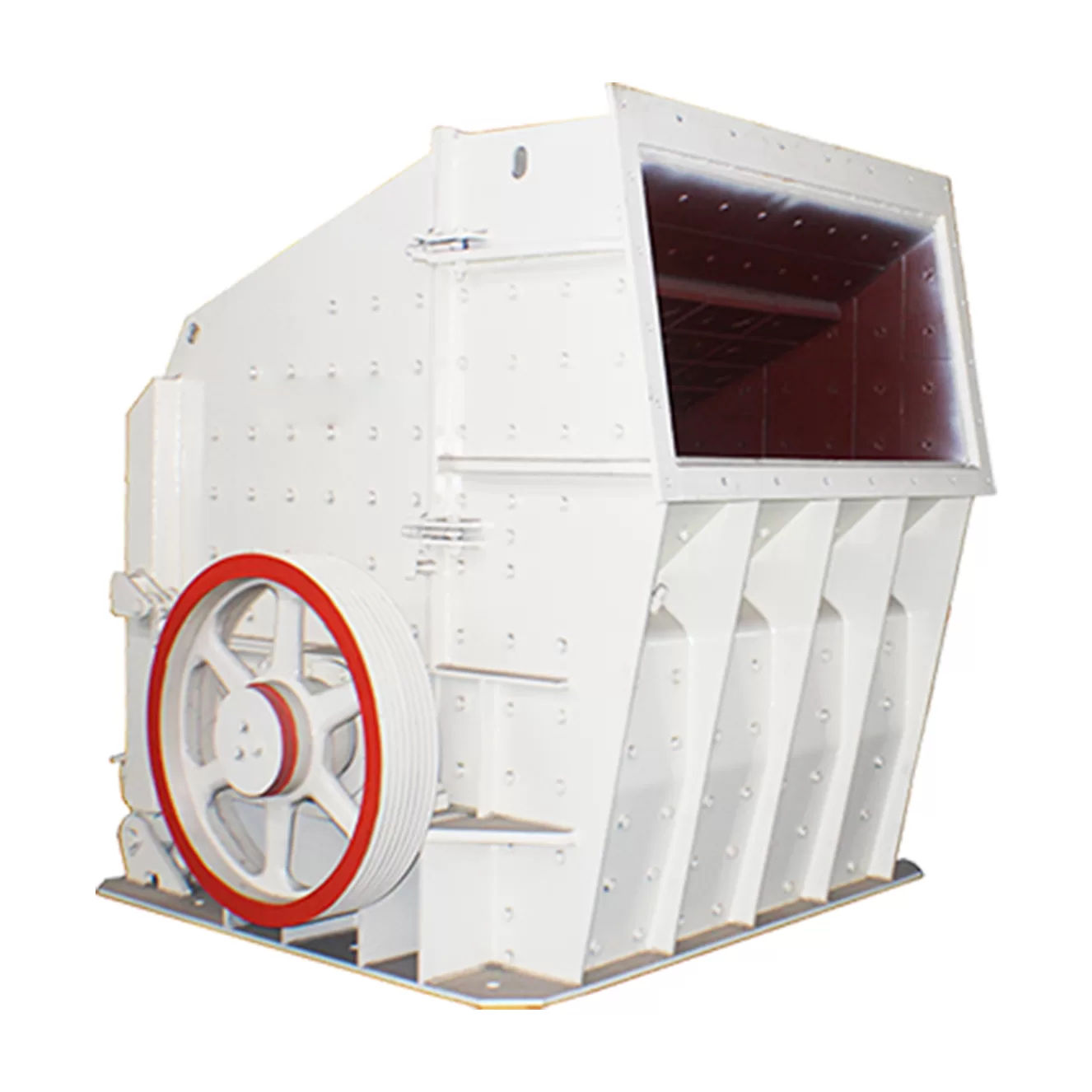
Impact crusher is widely used in the production of high grade stone materials used in highway, hydropower, artificial sand and stone, crushing, construction and other industries with its excellent performance.
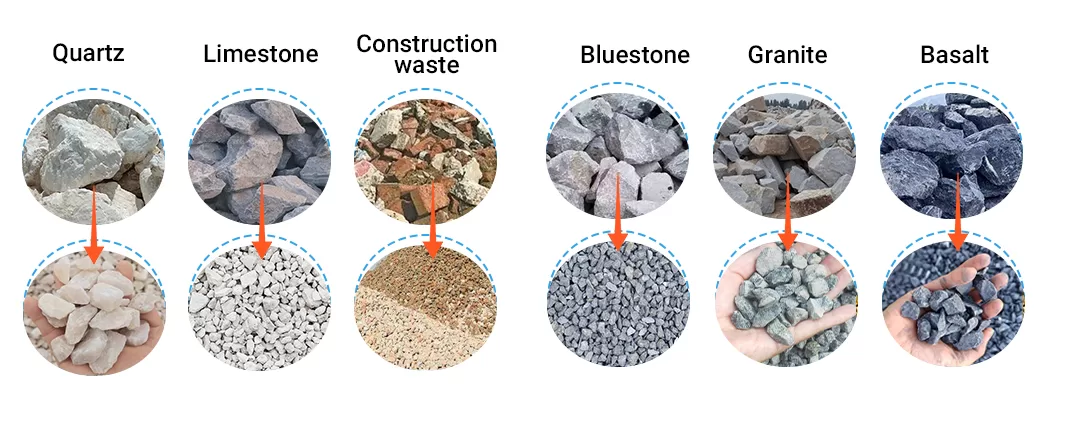
This series impact crusher is able to crush coarse, medium and fine materials such as granite, limestone and concrete whose feeding granularity does not exceed 500mm and compression strength does not exceed 350MPa in many industries such as ore crushing, railway, highway, energy, cement, chemistry and constriction. The size of the discharging granularity is adjustable, and the crushing specifications are diverse.
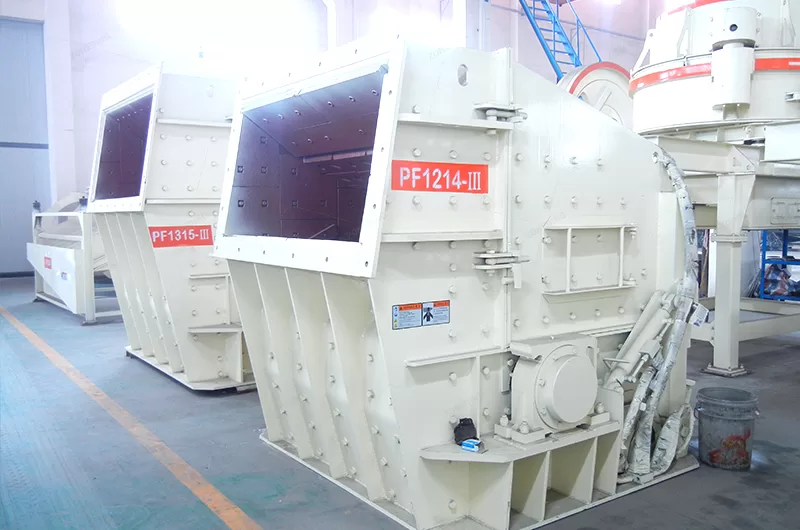
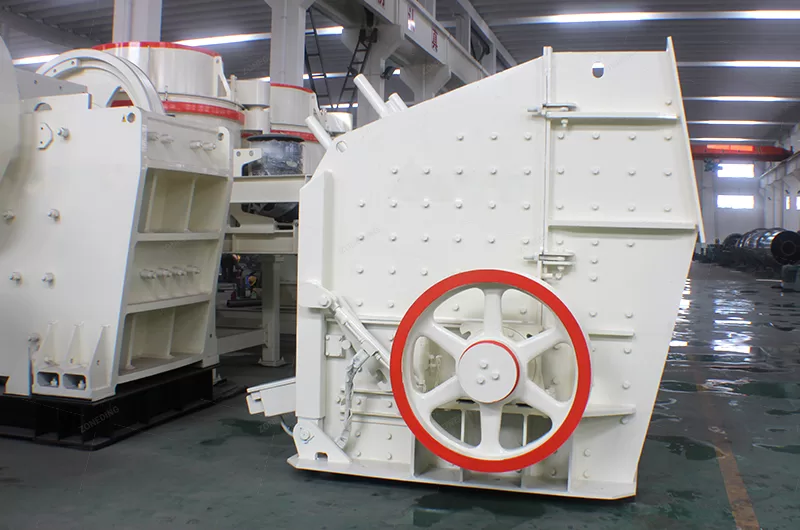
An Impact Crusher is a machine that breaks rock by hitting it with a heavy metal bar. This bar is called a blow bar. The blow bars are attached to a large spinning drum called a rotor. The rotor spins at a very high speed. When a rock falls into the machine, the blow bar hits it with great force. This hit makes the rock fly against metal plates on the inside of the machine. These plates are called impact curtains or liners. The rock keeps bouncing between the blow bars and the plates until it is small enough to fall out of the bottom.
This Horizontal Shaft Impactor (HSI) is very different from a jaw or cone crusher. Those machines squeeze the rock. This machine smashes the rock. This smashing action breaks the rock along its natural lines. At ZONEDING, we design our rotors to be very heavy. A heavy rotor stores a lot of energy. This energy helps the machine break the rock more easily. We use high-quality bearings to keep the rotor spinning smoothly for a long time. Our design ensures that the machine does not shake too much during work.
The type of rock you have is the most important factor. An impact crusher is the best crusher for limestone, gypsum, and coal. These are soft or medium-hard rocks. If your rock is not too abrasive, this machine is a dream. It has a high “crushing ratio.” This means it can turn a large rock into a small one in just one step. This saves you money because you might not need a second machine. It also works very well with rocks that have a lot of moisture.
However, be careful if your rock is very hard like granite or basalt. Hard rocks have a lot of silica. Silica acts like sandpaper and eats your blow bars very quickly. If you crush granite with an impactor, you will have to change parts every few days. This will cost you a lot of money and time. At ZONEDING, we always test your rock sample first. We tell you the truth about which machine is best. If your rock is too hard, we might suggest a Cone Crusher instead. We want you to have the lowest operating cost possible.
You must understand the impact crusher vs cone crusher debate to make a good choice. An impact crusher gives you a better stone shape. The stones are cubical and move easily in concrete. But the impact machine has higher wear costs if the rock is hard. A cone crusher is more expensive to buy at first. But a cone crusher is much better at handling hard, abrasive rocks. It squeezes the rock, so the steel parts last much longer than in an impactor.
So, if you need the perfect shape and your rock is soft, buy an Impact Crusher. If your rock is very hard and you care more about low maintenance, buy a cone. ZONEDING offers both machines from our factory. We help you look at your long-term profit. Sometimes, a Jaw Crusher is the best primary machine, and the impactor is the best secondary one. We design the whole line to match your goal. We make sure the machines work together so you don’t waste energy or time.
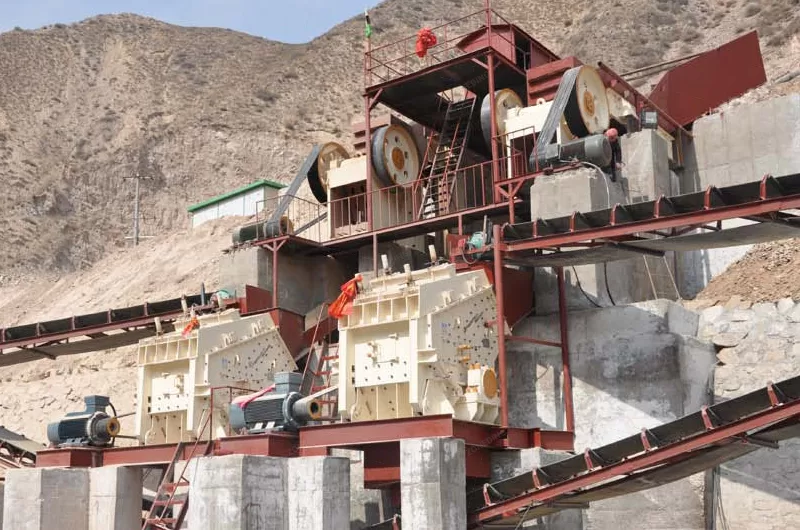
Impact crusher can be used in primary and secondary crushing. They are suitable for crushing medium-hardness materials, such as limestone, construction wastes (concrete wastes, asphalt wastes, brick wastes, etc.).
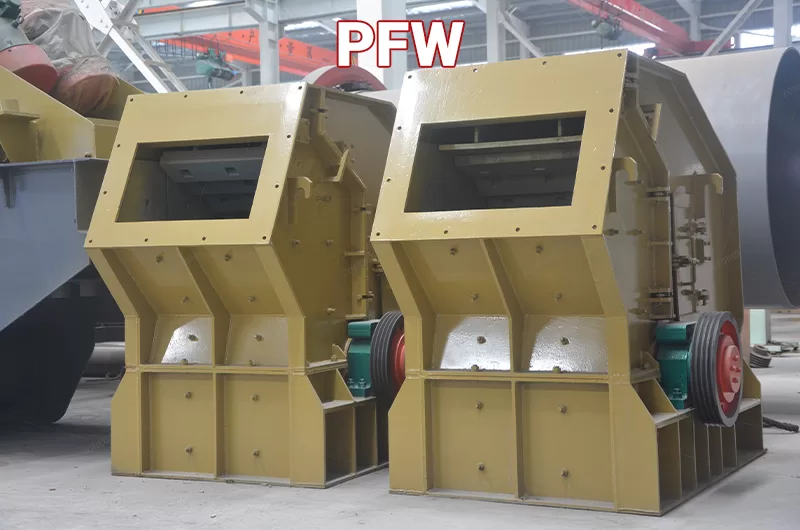
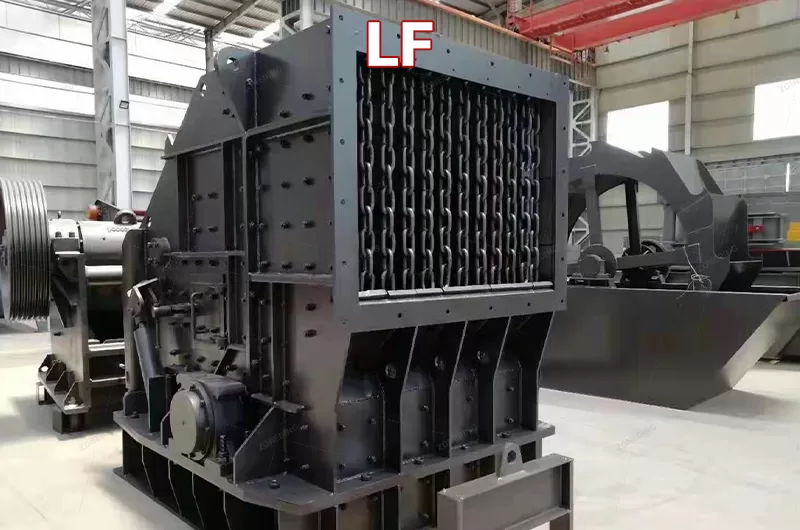
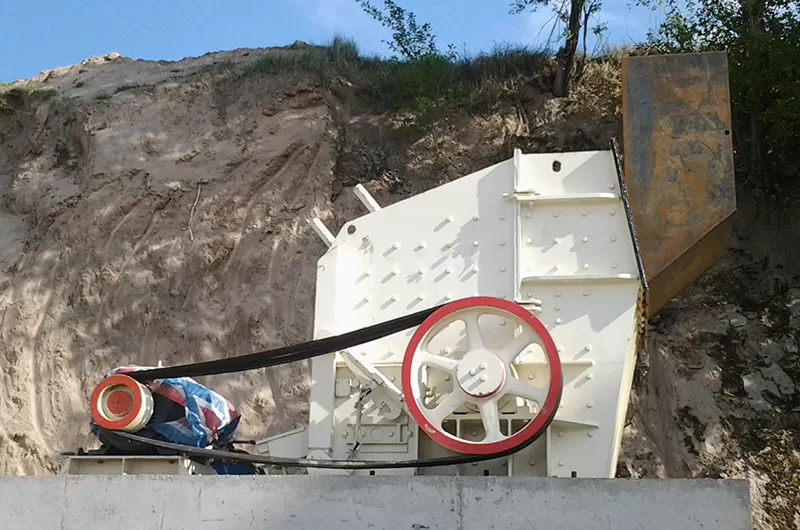
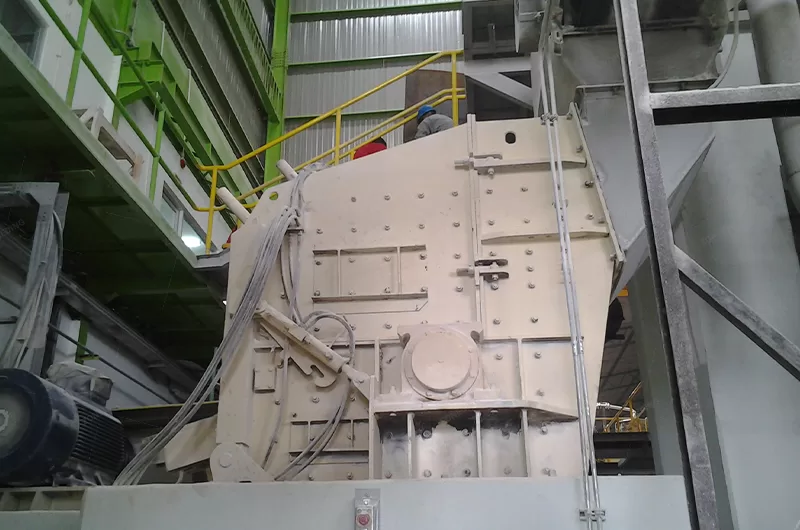
An impact crusher’s core is the rotor, fitted with rigidly attached hammers. Driven by the transmission, the fast-spinning rotor uses its inertia, via the hammers, to forcefully strike and shatter material. Secondary crushing occurs when the material hits the specifically designed impact plates within the crushing chamber, which provides space for this action. The entire assembly is supported by a robust frame that handles the operational forces, ensuring stability. Finally, discharge size adjustment devices allow users to control the final particle size of the crushed material to meet different production needs.
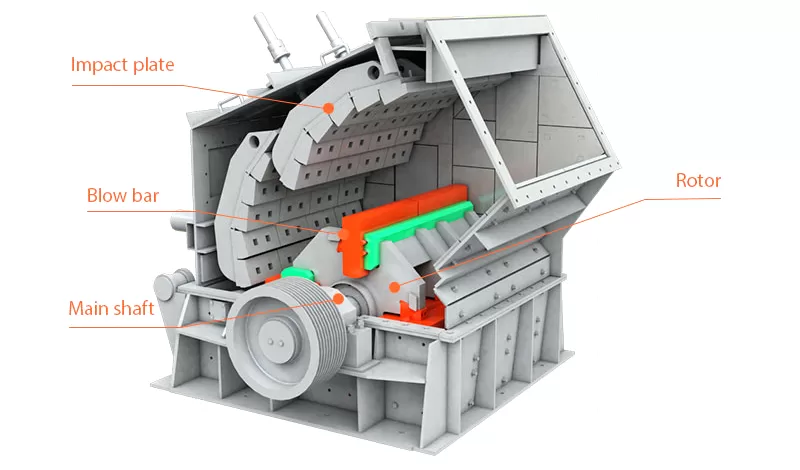
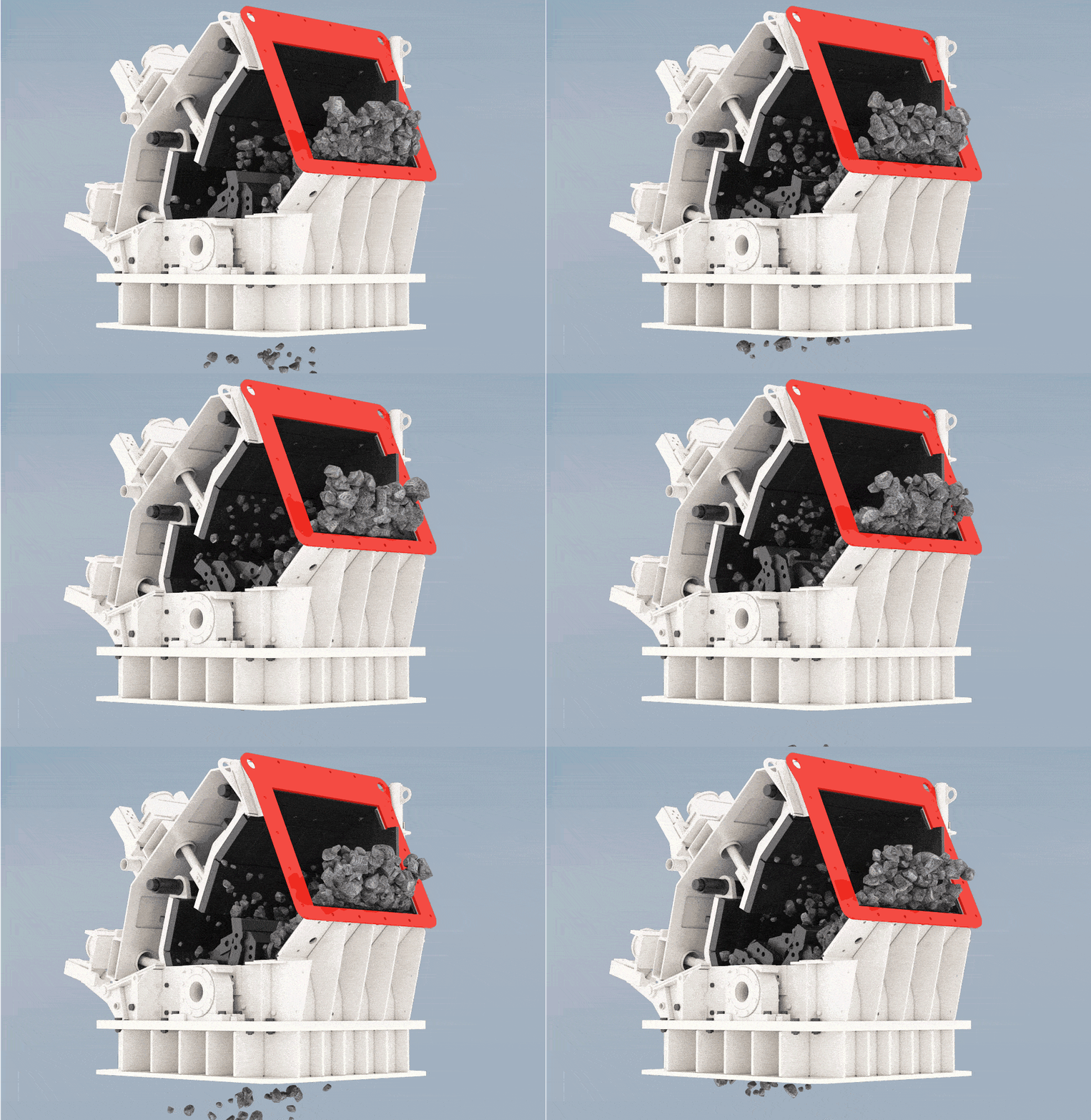
When the impact crusher is working, the motor drives the rotor through the V-belt, and the material is crushed by the high-speed impact of the hammer and is thrown to the impact bracket to break again, and then bounce from the impact surface to the impact area of the hammer again. This process is repeated until the material is crushed to the required size. The material flows from the first feed port to the first crushing chamber, and then into the second crushing chamber. When the crushed ore particle size is smaller than the gap between the hammer head and the impact plate, it will be discharged . This machine adopts a self-weight safety device on the rear rack. When the non-broken objects enter , the front and rear counter-attack frames will retreat, and the non-broken objects will be discharged from the machine body.
The secret to why it is the “best for cubical stone” is the velocity. When the blow bar hits the rock, it creates a fast internal vibration. This vibration causes the rock to break into pieces that are the same length in all directions. Squeezing machines often create “slabs” or thin, flat pieces. Flat pieces are bad because they break easily under weight. Cubical stones are strong. They create a very high-quality finish for road construction.
ZONEDING machines use multiple impact curtains. You can adjust these curtains to change the path of the rock. This makes the rocks hit each other more often. We call this “rock-on-rock” crushing. This process grinds away any sharp or flat edges. The result is a pile of stones that look like small dice. Your customers will pay more for this high-quality aggregate. It makes their concrete stronger and their buildings safer. Using our machine helps you build a reputation for quality in your market.
You might hear about HSI and VSI. HSI stands for Horizontal Shaft Impactor. This is the big machine that handles larger rocks. It has a horizontal rotor and big blow bars. It is usually used as a primary or secondary crusher. VSI stands for Vertical Shaft Impactor. A VSI has a vertical rotor and is often used as a tertiary crusher. It is the king of making sand. It works like a kitchen blender where rocks hit each other at extreme speeds.
Use an HSI if you need to turn 500mm rocks into 40mm stones. Use a VSI if you need to turn 20mm stones into fine sand. ZONEDING builds both types. Many big plants use an HSI first and a VSI last. This combination gives you the best shape and the most sand. We help you decide which one fits your specific stage in the production line. Both machines use the power of impact to give you the best final product quality.
The blow bar is the part that wears out the most. Changing it is a big part of your impact crusher blow bar replacement cost. But you can make them last longer with a few tricks. First, you must feed the machine correctly. Do not let one side of the machine be empty while the other is full. This causes uneven wear. Second, you can flip the blow bars. Most ZONEDING blow bars can be used on two or four sides. When one side is worn, you just turn it around.
Third, use the right material for your bar. We offer blow bars made of high-manganese steel or high-chrome steel. Chrome is harder but can be brittle. Manganese is tougher but softer. Our engineers help you pick the right one for your rock. Also, make sure no metal scrap falls into the machine. Metal will break a chrome bar instantly. If you follow our maintenance guide, you can save 15% on part costs every year. This adds a lot of profit to your business over time.
The CSS stands for Closed Side Setting. It is the gap that determines the stone size. In an impactor, you adjust this by moving the impact curtains closer to the rotor. If you want small stones, you move the curtains in. If you want big stones, you move them out. Many old machines require you to turn big bolts by hand. This is slow and difficult. Your workers have to stop the whole plant for a long time.
At ZONEDING, we offer hydraulic adjustment for our impact crushers. You use a small hydraulic pump to move the curtains. It takes only a few minutes. You can even do it while the machine is running (in some models). This allows you to fine-tune your product size instantly. If your customer wants 20mm stone today and 10mm tomorrow, you are ready. This flexibility makes you a better supplier. It also keeps your production line running at the perfect efficiency every hour.
Yes, the impactor is the champion of recycling. In 2026, many people are using impact crusher for concrete recycling. When you crush old buildings, there is often rebar (steel bars) inside the concrete. A jaw or cone crusher gets jammed by this steel. But an impact crusher knocks the concrete off the steel. The steel then passes through the machine easily. You can then use a magnet to take the steel away and sell it.
This is a great way to make money. You get paid to take the old concrete, and you sell the new rocks and the old steel. It is very eco-friendly. ZONEDING machines for recycling have special protective liners. These liners resist the damage from old bricks and asphalt. If you are starting a recycling business, a mobile impact crushing plant is the best choice. It allows you to move the machine to the demolition site. This saves you the high cost of trucking big pieces of old concrete.
The rotor is the heart of the machine. The weight of the rotor is very important. This is called inertia. Think of a heavy bicycle wheel. Once it starts spinning, it is hard to stop. A heavy rotor keeps its speed even when a big rock hits it. If the rotor is too light, it will slow down every time it hits a rock. This makes the motor work too hard and wastes a lot of electricity.
ZONEDING uses “heavy-duty” rotors. We use thick steel plates and high-quality welding. A heavier rotor means you can crush larger rocks more easily. It also means you get a more consistent stone size. A steady speed leads to a steady output. It reduces the stress on the V-belts and the electric motor. Investing in a machine with a high-quality, heavy rotor is a smart move for your bottom line. You get more production with less power consumption.
Safety is our top priority at ZONEDING. An impact crusher is a very powerful machine. It has many parts moving at high speed. You must have the right safety features. First, we use a door locking system. You cannot open the machine while the rotor is still spinning. This prevents terrible accidents. Second, we have vibration sensors. If the machine shakes too much because a part is loose, the sensor stops the motor immediately.
Third, we use emergency stop buttons in multiple places. You or your workers can stop the plant instantly if something goes wrong. We also provide safety covers for all the belts and gears. We want your team to be safe every day. A safe quarry is a productive quarry. We also provide full training for your staff. We show them how to open the machine safely to change parts. Good safety systems reduce your insurance costs and protect your most valuable asset: your people.
One problem with impact crushing is dust. Because the rocks hit each other so hard, they create small particles. These small particles are called “fines” or dust. If you have too much dust, it can blow into the neighbors’ homes or clog your other machines. It can also be bad for your workers’ lungs. You need a way to control this “excess dust” during your daily production.
ZONEDING machines have several solutions for dust. We offer water spray systems. These sprays put a fine mist of water at the entrance and exit of the crusher. This keeps the dust on the rocks. We also provide sealed covers for our conveyor belts. This stops the wind from blowing the dust away. Also, by adjusting your rotor speed correctly, you can reduce the amount of dust you create. We help you find the “sweet spot” where you get great shape but less waste. This makes your operation cleaner and many neighbors happier.
Buying from ZONEDING is a smart choice because we are a direct manufacturer. You are not buying from a trader who knows nothing about engineering. We have an 8,000 square meter factory and 15 expert engineers. We control the quality of every weld. We use the best parts, like SKF bearings and Siemens motors. This means our machines last longer than cheap alternatives. For a B2B owner, reliability is everything. If your machine stops, your contracts are at risk.
We also offer the best price because there is no middleman. You get the high technology from China at a factory-direct cost. We have sold machines to 120 countries, so we know how to handle international shipping and taxes. We provide a full service from plant design to site installation. Our team stays with you until the first ton of rock is sold. This “one-stop” support reduces your stress and helps you start making money faster. We are your partner, not just a supplier.
You must keep your machine happy to keep it working. Daily maintenance is the best way to avoid big repairs. First, check the lubrication. You must grease the bearings every day. This stops them from getting too hot and burning out. Second, check the tension of the V-belts. If they are too loose, they will slip and burn. If they are too tight, they will break the shaft. Third, look at the blow bars for cracks or extreme wear.
You should also check the bolts inside the machine. The impact force can make bolts get loose over time. A loose bolt can fall into the machine and cause a lot of damage. Cleaning the machine is also important. Do not let dirt build up around the motor or the oil lines. It only takes 15 minutes a day to do these checks. These 15 minutes can save you 15 days of downtime later. ZONEDING provides a simple checklist for your workers to follow every morning.
You should always calculate your “cost per ton.” This includes electricity, labor, and wear parts. In an impactor, the blow bars and liners are the main cost. For a soft rock like limestone, your maintenance cost might be very low—maybe $0.05 to $0.10 per ton. But if you try to crush hard rock, this cost could jump to $0.50 or more. This is why picking the right rock is so important for your profit.
Electricity depends on your motor size and your rotor weight. A ZONEDING machine with a heavy rotor uses less power per ton. We help you calculate these numbers before you buy. We give you a realistic estimate based on your rock type. Knowing your cost per ton helps you set the right price for your stone aggregate. It ensures that every truck that leaves your site is putting money into your bank account. Managing your costs is the only way to beat your competitors in the long run.
| Type | Feeder opening size(mm) | Max feeding size(mm) | Rotor size D*L(mm) | Capacity(t/h) | Power(kw) | Overall Dimension (mm*mm*mm) |
| PF-1007 | 450X750 | 250 | Φ1000X700 | 10-60 | 45 | 2330*1700*2560 |
| PF-1010 | 450X1100 | 300 | Φ1000X1050 | 50-90 | 55 | 2330*2010*2560 |
| PF-1210 | 450X1100 | 300 | Φ1250X1050 | 70-130 | 90 | 2640*2010*2850 |
| PF-1214 | 450X1450 | 350 | Φ1250X1400 | 90-180 | 132 | 2640*2400*2850 |
| PF-1315 | 650X1500 | 350 | Φ1320X1500 | 120-250 | 160-200 | 2930*2670*3150 |
| Type | Feeder opening size(mm) | Feed side length(mm) | Processing capability(t/h) | Power(kw) | weights (kg) |
| LF-150 | 820X980 | 100-200 | 100-200 | 90-200 | 12000 |
| LF-250 | 960X1360 | 200-400 | 200-400 | 180-250 | 17000 |
| LF-350 | 1050X1700 | 300-500 | 300-500 | 200-400 | 24000 |
Higher speed = more fines, better shape, higher wear. Lower speed = less fines, potentially lower throughput/shape quality. Balance needed based on feed and product spec.
Pre-screen feed, choked feed (if applicable), optimal speed, ceramic inserts, wear-compensating designs (adjustable curtains), regular blow bar rotation.
Tighter gaps/steeper angles = higher reduction, better cubicity, but more wear & potential blockage. Multiple aprons refine control. Final gap tunes top size.
Risk of severe damage to rotor/bars and jamming. Modern designs use heavy-duty parts, better locking, hydraulic relief. Pre-processing (magnets) vital.
Abnormal vibration (imbalance, bearing issues), erratic power draw (feed/jamming), unusual noise (loose parts, wear). Monitor trends for predictive maintenance.